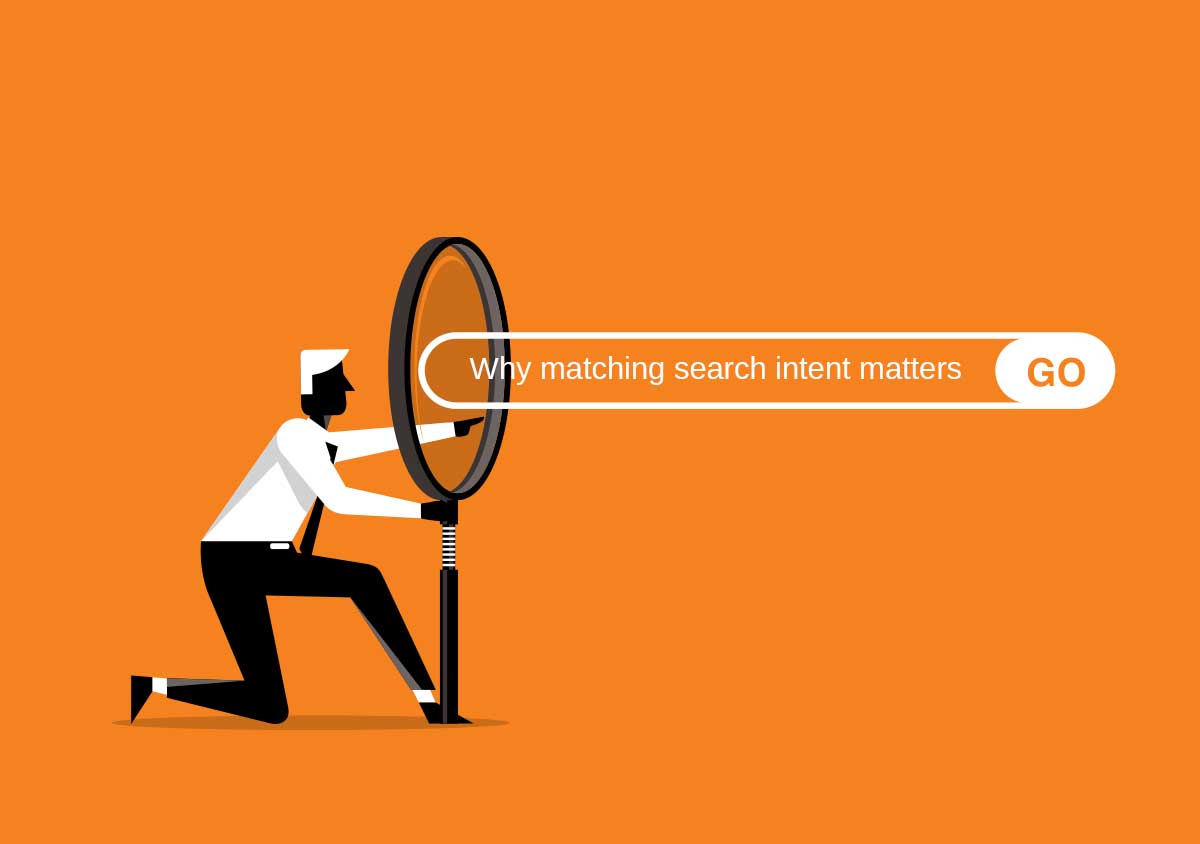
Here's the short version: search intent is the reason behind a search — what the person actually wants when they type a query into Google. Match your page to that reason and you rank; ignore it and even beautifully written content falls flat.
It's the most common reason a page underperforms. You pick a solid keyword, write a genuinely good page around it, and still land nowhere — because you answered a question nobody was asking. Google's entire job is to serve the result that best matches what the searcher is really after, so if your page doesn't match that intent, it doesn't get shown.
This guide breaks down what search intent is, the four types you need to know, how to work out the intent behind any keyword, where businesses get it wrong, and why intent matters even more now that AI is answering questions directly.
- Search intent is the goal behind a search — to learn, to find a specific site, to compare, or to buy.
- There are four main types: informational, navigational, commercial and transactional.
- The fastest way to read intent is to Google the term and study what already ranks.
- Match your content to the intent and you rank; a mismatch is the most common reason good pages flop.
- AI search rewards intent even more, because it's built to understand meaning, not just match keywords.
What is search intent?
Search intent (sometimes called user intent) is the reason behind a search query. Someone typing "how to fix a leaking tap" wants a guide. Someone typing "emergency plumber near me" wants to call one right now. Same industry, completely different goals — and Google knows the difference.
That's why keyword research is only half the job. The other half is asking: when someone searches this, what are they actually hoping to find? A definition? A comparison? A product to buy? A phone number? Get that right and you're writing for the exact person Google is trying to satisfy, which is the whole game.
The four types of search intent
Almost every search falls into one of four buckets. Knowing which one your keyword sits in tells you what kind of page to build.
Informational
The person wants to learn something — "what is local SEO", "how does Google rank pages". Best served by guides, blog posts and clear, helpful answers. They're not ready to buy; they're ready to understand.
Navigational
They want a specific website or page — "SEO Plans blog", "Facebook login". They already know where they're going and are using search as a shortcut.
Commercial
They're researching before a decision — "best SEO agency Gold Coast", "Shopify vs WooCommerce". Comparisons, reviews and detailed service pages win here, because the person is weighing up options.
Transactional
They're ready to act — "buy running shoes online", "SEO packages pricing". They want a clear, frictionless path to do the thing, whether that's a purchase or an enquiry.
Matching your content to intent
Once you know the intent, the format almost picks itself. Informational search? Write a genuinely helpful guide, not a sales pitch. Commercial? Give an honest comparison that helps them decide. Transactional? Get out of the way and make buying or enquiring dead simple.
The classic mistake is answering the wrong intent — dropping a "buy now" page in front of someone who just wants to understand their options, or writing a 2,000-word essay for someone who wants a phone number. Meet people where they are in their journey and they stick around, which sends Google the engagement signals that reinforce your ranking. Good keyword research gives you the phrase; intent tells you what to do with it.
How to read the intent of a keyword
You don't have to guess. Google the term and read the first page of results like a menu — they're a live readout of what Google has already decided the intent is.
- Blog posts and guides ranking? The intent is informational — write to teach.
- Product or category pages? It's transactional — build a page to convert.
- Comparison and "best of" lists? It's commercial — help them choose.
- A mix, plus a map pack? There's local intent in play, and your local SEO matters here.
If the whole first page is buying guides and you've written a hard sales page, that's your answer for why you're not ranking. The results don't lie — they show you exactly what Google believes the searcher wants.
Where businesses get it wrong
The most common intent mistake is chasing high-volume keywords without checking what they mean. A term might get thousands of searches a month, but if every one of those searchers wants a free how-to and you're selling a service, the traffic won't convert — and you probably won't rank anyway, because your page type doesn't match.
The other trap is trying to make one page serve every intent at once — part guide, part comparison, part sales pitch — so it does none of them well. It's usually stronger to build separate pages for separate intents: a helpful blog post to capture the researchers, and a focused service or product page to convert the ready-to-buy. Clarity beats cramming every time.
Why intent matters more with AI search
AI search has raised the stakes. Google AI Overviews and tools like ChatGPT are built to understand meaning, not just match keywords, so they reward content that genuinely satisfies the question behind the search. Get the intent right and you're not only ranking — you're the kind of clear, on-point answer an AI is happy to quote. More on getting found in AI search →
If anything, intent is now the whole ballgame. Keyword tricks and density never mattered less; understanding what your customer actually wants and giving it to them directly never mattered more.
Start with the why
Keywords open the door, but intent is what gets you invited in. Before you write a single word of a page, ask what the person searching really wants — and then give them exactly that, in the format they're expecting. It's a small shift in thinking that quietly fixes a lot of underperforming content.
If your pages are getting traffic but not enquiries, or ranking for nothing despite being well written, an intent mismatch is often the culprit. That's the kind of thing we untangle every day: matching your keywords to what your customers are genuinely looking for, so your content pulls its weight. You focus on your business, and we'll make sure the right people find it.